
Canadian County VINELink Coverage
Oklahoma’s official service is OK VINE, reached through VINELink or by calling 1-877-654-8463. State materials describe county jail and ODOC custody coverage, as well as some probation and parole changes. The Canadian County Sheriff links the same phone number and VINELink route on its current inmate-search page. That local placement matters because it connects the statewide alert system to the sheriff’s own custody source.
VINELink is designed around a specific person and a reported event. It is not a browsable archive of all Canadian County releases. A county jail record may report a release or transfer. An ODOC record may report a prison move, parole-related change, or discharge-related event. The service does not settle federal Bureau of Prisons or ICE custody, and a county event does not prove that all custody ended.
The Oklahoma Sex and Violent Crime Offender Registry is also a different tool. It covers only people who have a statutory duty to register. A registry match can support a current registration fact, but the registry is not a general list of released people, and no match says nothing about most former inmates.
| Custody system | Use of VINELink | Separate confirmation |
|---|---|---|
| Canadian County Jail | Search a known person and register for a reported custody event | CCSO released list, jail, or release record |
| Oklahoma DOC | Check a reported state status and eligible supervision changes | ODOC lookup or release/status-change document |
| Federal BOP | Not covered by Oklahoma VINE | BOP Inmate Locator |
| ICE | Not resolved by a county VINE event | ICE Online Detainee Locator or ICE office |
Search Canadian County VINELink Records
Use the most precise identifier available. Names may include suffixes, compound surnames, or alternate spellings, and two people may share a name. A result is useful only after the identity and reporting custodian match. If a booking number or DOC number appears in another official record, keep it close while searching, even if the VINELink screen uses a different label.
- Open VINELink and select Oklahoma as the state.
- Choose Find an Offender, then enter the full name or available offender identifier.
- Review each match and compare identifying details, the reporting agency, and the custody location.
- Open the correct person’s custody record and read the event or status exactly as displayed.
- If no safe match exists, change only a known spelling detail or contact the likely custodian for help.
A no-result search is narrow evidence. It means no matching public result appeared for those inputs at that time. It does not prove that the person was never booked, that an older event remains online, or that another agency does not hold the person. For a broader source-by-source path, use the Canadian County released inmate search.
The official VINELink Oklahoma search and notification screen shows the service’s state-first workflow.
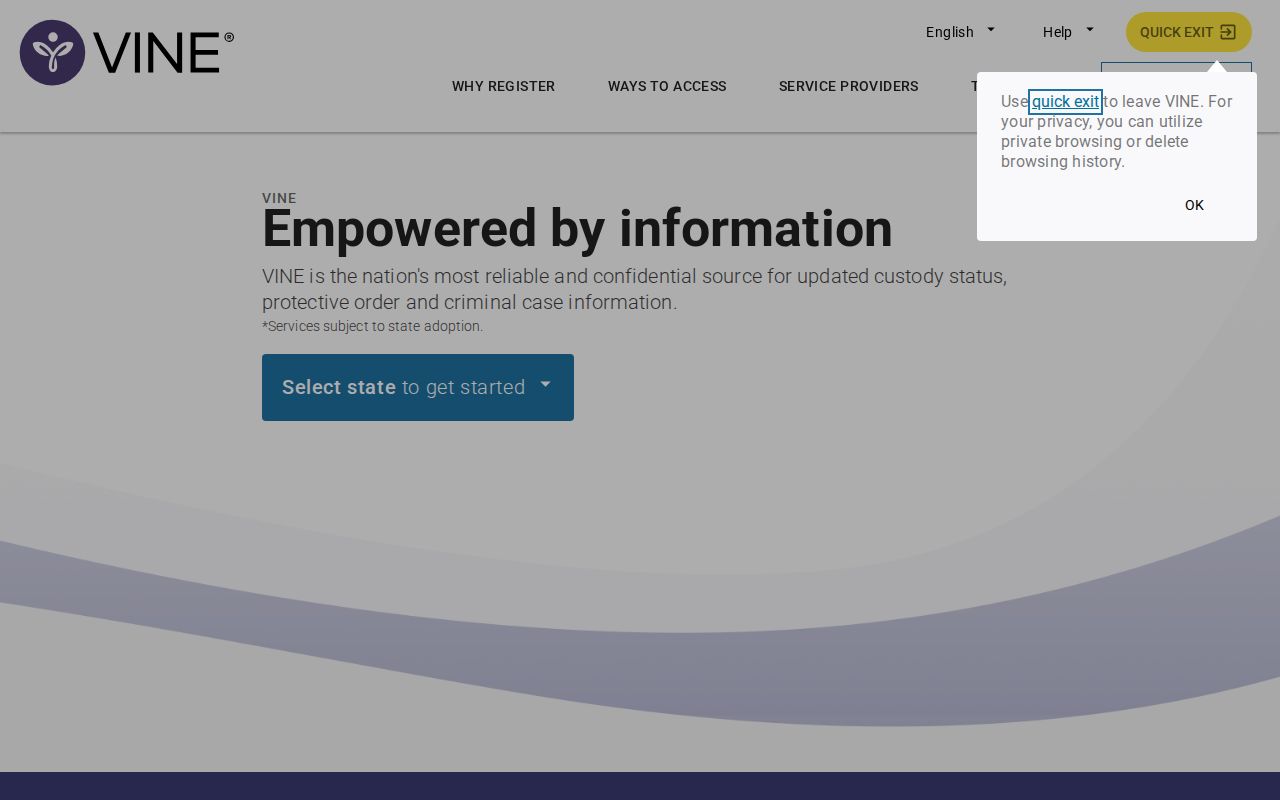
That agency context is essential because the same person may have separate county and state custody records.
Canadian County VINELink Release Fields
VINELink is event and status oriented. The exact fields can vary by agency and record type, so the screen should be read as a report from the named custodian. A “released” event supports a departure from that reporting custody. It does not by itself rule out another jail, an ODOC placement, ICE processing, a federal hold, or a later booking.
| Field or cue | What it helps confirm |
|---|---|
| Name and identifier | Whether the record belongs to the intended person |
| Reporting agency | Which jail, correctional system, or supervision source supplied the data |
| Custody status | The status currently reported by that source |
| Facility or location | Where the source reports custody or supervision |
| Event type | A reported release, transfer, escape, death, or supervision change |
| Notification option | Whether registration is offered for that record and event set |
A released person usually no longer appears on the CCSO current roster because that page is limited to people in custody. The sheriff’s separate 72-hour released list is stronger for a recent Canadian County jail release because it supplies the booking number, exact release timestamp, and reason. “TOT OTHER AGENCY” is a handoff, not a community release. For an older county event, ask CCSO Records for the booking and release sheet.
Note: Save the date, time, reporting agency, and identifier used so a later status change can be reconciled without merging two people.
Register Canadian County Release Alerts
Registration begins from the correct custody record, not from a broad name search. Oklahoma materials say a person may use more than one phone number or email address. Available delivery methods can include phone, email, SMS or text, TTY, and app alerts. Live multilingual help is also available. Keep the chosen contact details current so the notice reaches the right destination.
- Confirm the person and reporting agency, then select Notify Me or Register.
- Choose an available delivery channel and enter the requested phone, email, or app details.
- For telephone notice, create a four-digit PIN used to acknowledge the automated call.
- Complete any confirmation shown by the service and keep the registration details in a safe place.
- When an alert arrives, read the event and agency, then confirm it with the source that reported the change.
The four-digit PIN is specifically tied to telephone acknowledgment in the official Oklahoma instructions. It should not be described as mandatory for email or text. If a call is unanswered, the system may leave a message and retry until the PIN is entered or for up to 24 hours. A forgotten PIN can be addressed by calling 1-877-654-8463 and choosing 0 for a representative.
Canadian County VINE Notification Layer
The Canadian County Sheriff embeds Oklahoma VINE in its own current-custody search path. As a result, an alert is not merely a generic statewide add-on. It can complement the official CCSO roster and the sheriff’s released-person list for a named individual. The sources still have different roles: the roster addresses current county custody, the 72-hour feed records recent county departures, and VINE provides a person-specific status and notification channel.
Oklahoma’s Attorney General describes OK VINE as free, confidential, available around the clock, and supported by live representatives in more than 240 languages. The official OK VINE coverage page identifies the available access and notification routes.
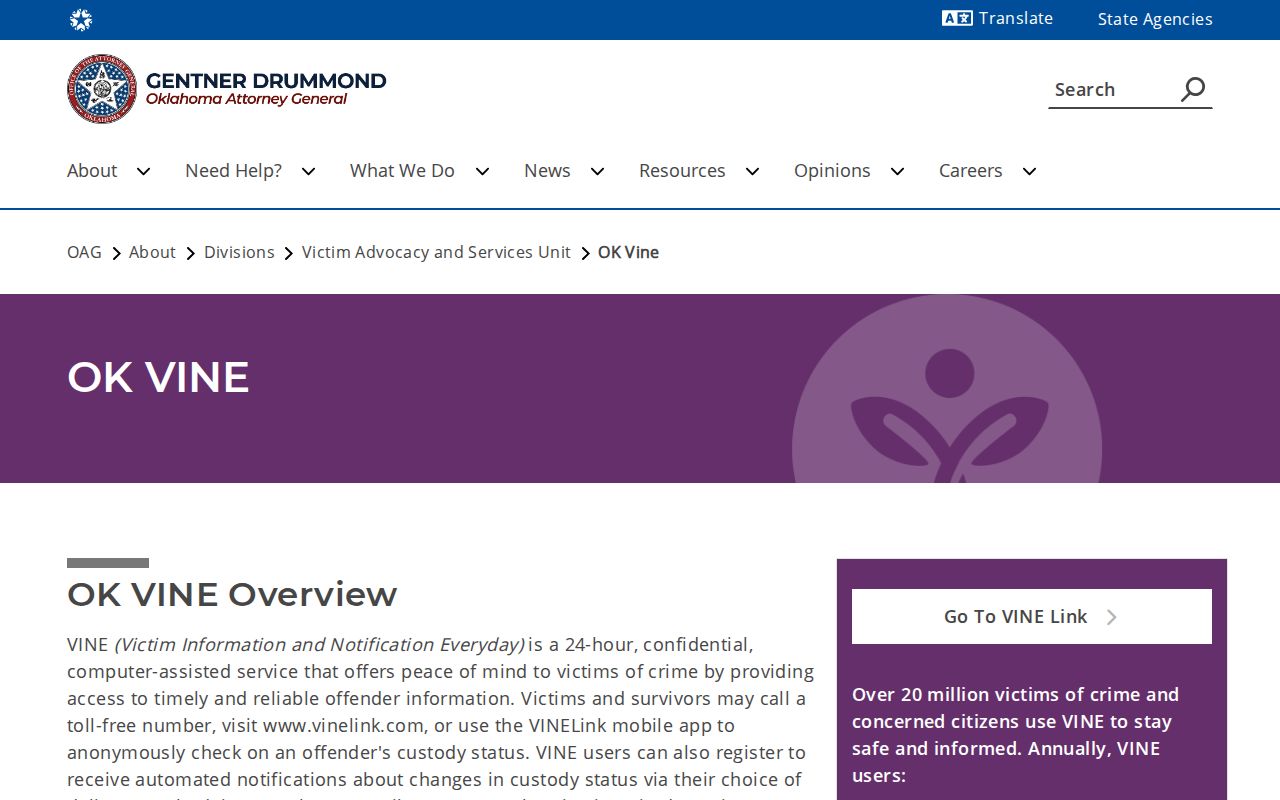
The statewide service can carry county, ODOC, and supervision events, but each alert must still be tied to the exact person and reporting agency.
Canadian County Parole Notifications
The Pardon and Parole Board states that any person may register with VINE. It also warns that PPB’s victim-notification program is separate. That distinction prevents a common mistake. A VINELink alert registration does not automatically enroll someone in every Board notice, hearing process, or direct victim-service channel.
For a parole matter, check the PPB docket or result for the decision record and ODOC for current supervision status. A PE Date is a parole-eligibility date, and a PRD is a projected release date. Neither is an actual exit record. Board Action wording can reflect a denial, recommendation, deferral, detainer issue, or another step. A favorable action may still require final authority, conditions, a release plan, or resolution of a hold.
The PPB VINE and victim-notification page makes the two notification systems visible in one official source.
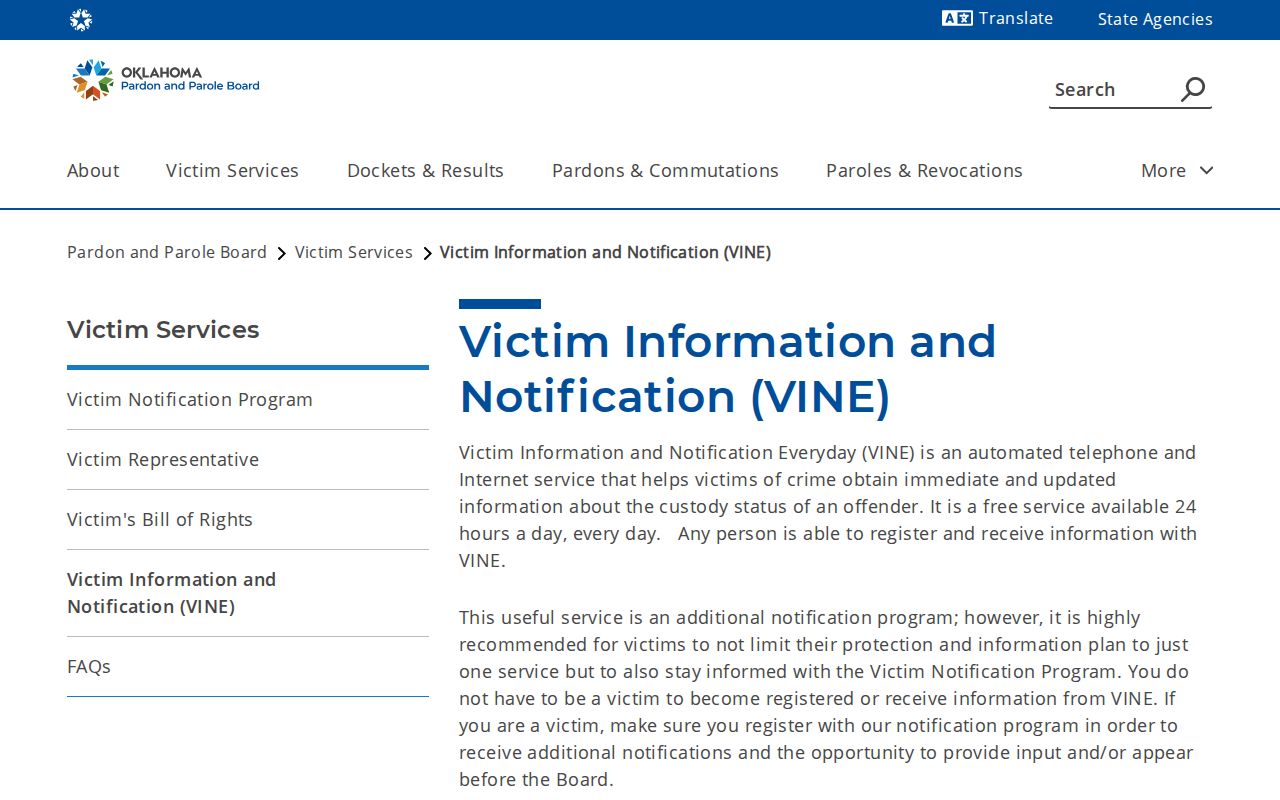
This separation helps users select the alert channel that matches the event they need to follow.
Confirm Canadian County VINELink Events
VINELink depends on information supplied by participating agencies. A status may lag while a jail processes release, a receiving agency accepts a transfer, or a correction is posted. The service is not a certified historical archive. It also does not cover federal BOP custody. Use the BOP Inmate Locator for FCI El Reno or another federal facility, and use ICE’s locator for immigration custody where the facts point there.
Confirmation should follow the custodian. For a recent Canadian County jail event, compare the CCSO 72-hour release entry and read its reason. For an older jail event, request the release sheet. For state custody, check the ODOC offender record and request a Certificate of Release or Notice of Inmate Status Change when the exact disposition matters. Court dockets can explain a bond, plea, dismissal, or sentence, but they generally do not show when detention staff completed the physical release.
Do not select the most favorable source when records disagree. Preserve each agency’s wording and access time. A county release can be true while a VINE update is pending; an ODOC community location can be true while full discharge is still in the future.
Timing also affects the comparison. The Canadian County Sheriff does not promise a real-time update interval for its public pages, and VINE timing rests on agency reporting. A court order can authorize release before jail staff finish the check for holds. Conversely, a VINE release event may describe departure from one custodian after another agency has already accepted the person. Write down the event time, the time each source was checked, and the agency name before calling about a mismatch.
Identity deserves the same care. Do not merge two records from a name alone. Compare a booking number, DOC number, case number, birth information when lawfully displayed, and the booking or event date. If an identifier conflicts, stop and ask the reporting agency to resolve it. A corrected, sealed, or expunged record may later disappear from a public path, so an old screen should not be treated as permanently controlling.
Note: A transfer alert confirms movement between reported settings and must not be restated as release into the community.